Quranic Numerics · Human Embryology
Two words in a 7th-century text describe the human embryo with an accuracy that required a microscope to confirm.
Quran 23:14 Surah Al-Mu'minun · The Believers
ثُمَّ خَلَقْنَا النُّطْفَةَ عَلَقَةً فَخَلَقْنَا الْعَلَقَةَ مُضْغَةً فَخَلَقْنَا الْمُضْغَةَ عِظَامًا فَكَسَوْنَا الْعِظَامَ لَحْمًا ثُمَّ أَنْشَأْنَاهُ خَلْقًا آخَرَ
"Then We developed the semen into a leech. Then We developed the leech into a chewed lump. Then We developed the lump into bones. Then We clothed the bones with flesh. Then We produced it into another creature."
عَلَقَةً
Alaqa
Leech
The early embryo (days 23–24) clings to the uterine wall to feed exactly as a leech clings to a host. Under a microscope, its shape is also curved and leech-like.
مُضْغَةً
Mudgha
Something Chewed
At week 6, the developing vertebrae (somites) create a surface that looks exactly like teeth marks pressed into soft clay or flesh.
No microscope existed in 7th-century Arabia. The embryo at these stages is smaller than a grain of rice. These developmental details were invisible to the naked eye and unknown to any civilization of that era verified for the first time when microscopy became available in the 20th century.
What does the Arabic word عَلَقَةً (Alaqa) mean and why does it precisely describe the embryo at days 23–24?
A
A water droplet
Referring to the fluid environment of the womb
B
(Leech) عَلَقَةً
Leech the embryo looks like one AND clings to the uterine wall to feed, just as a leech clings to a host
C
A seed
Comparing the embryo to a plant beginning to grow
Explore both microscope-confirmed descriptions the leech stage and the chewed stage.
Alaqa shape and behavior both match
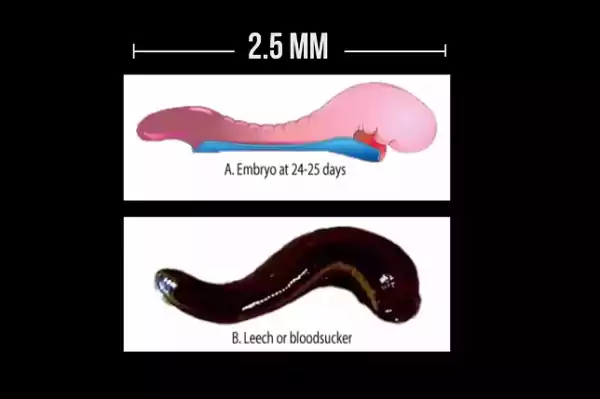
Embryo days 23–24
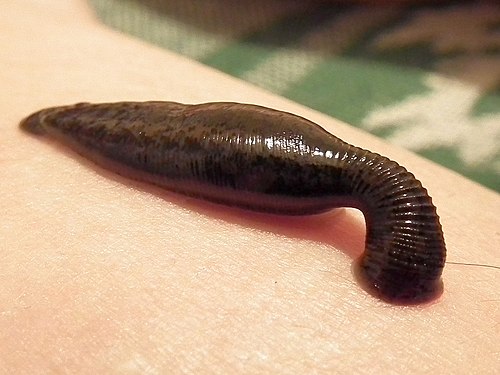
A leech
The word Alaqa captures a double accuracy:
Shape: the embryo curves into the same elongated form as a leech.
Behavior: it buries into the uterine wall and draws nutrients from the mother's blood precisely as a leech attaches to a host and feeds.
Both resemblances were only visible after microscopy was developed.
Shape: the embryo curves into the same elongated form as a leech.
Behavior: it buries into the uterine wall and draws nutrients from the mother's blood precisely as a leech attaches to a host and feeds.
Both resemblances were only visible after microscopy was developed.
Mudgha somites that look like bite marks
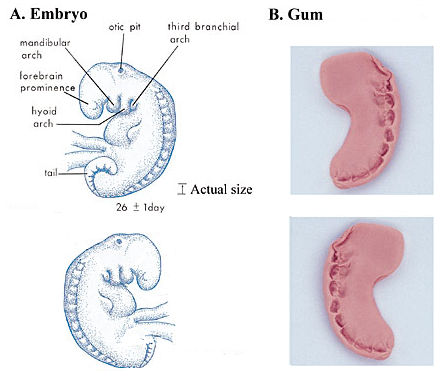
Embryo vs. chewed gum
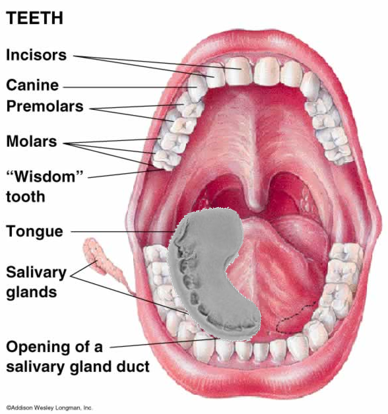
Chewed gum
At week 6, the embryo develops somites paired blocks of tissue that form along the spine. These create a bumpy, indented surface that looks exactly like teeth marks pressed into a piece of clay or soft flesh. The Arabic word Mudgha means precisely that: something that has been chewed. The visual match was confirmed by modern microscopy.
Both stages described in the 7th century both verified by microscope
0
years before microscopic embryology was possible yet both descriptions are accurate in shape, behavior, and correct developmental order.
At week 6, the embryo's developing vertebrae create a surface that looks like something chewed. What is the Arabic word for this stage, and what does it literally mean?
A
عَلَقَةً a clinging thing
Alaqa referring to attachment to the uterine wall
B
مُضْغَةً something chewed
Mudgha the somites (vertebrae blocks) give the embryo the appearance of a bitten piece of flesh
C
عِظَامًا bones
The stage after the bones have already formed
Lesson complete · +30 XP
Two words. Two precise descriptions of microscopic embryo stages. Written 1,400 years before anyone could see them.
0years before microscopic embryology confirmed this
عَلَقَةً
Alaqa · Leech
✓ Shape matches
✓ Behavior matches
The embryo at days 23–24 is curved like a leech and implants into the uterine wall to extract nutrients identical behavior to a leech on a host.
مُضْغَةً
Mudgha · Chewed
✓ Visual match confirmed
✓ Correct developmental order
At week 6, somites along the embryo's back create an appearance indistinguishable from teeth marks on soft flesh. Described correctly as the second stage, after the leech stage.
| Milestone | Date |
|---|---|
| Quran 23:14 revealed | ~610 CE |
| First compound microscope invented | ~1590 CE |
| Human embryology established as a science | 19th century |
| Alaqa (leech) and Mudgha (chewed) descriptions confirmed by microscopy | 20th century |
| Gap between Quran and confirmation | ~1,400 years |
Why "leech" is a double match: Most ancient descriptions of embryology (Greek, Indian, Egyptian) used metaphors from seeds, animals, or fluids none used "leech." The leech metaphor captures both the visual shape and the parasitic feeding mechanism simultaneously. Choosing this one word required knowing both facts neither visible without magnification.
A text from the 7th century described two microscopic stages of human development using words so precise that modern embryologists recognize both immediately leech for the implantation stage, and chewed for the somite stage.
No microscope. No laboratory. No scientific tradition of embryology anywhere in 7th-century Arabia. The Quran's two-word description outperforms the entire ancient world's understanding of embryonic development by over a millennium.
Dr. Keith L. Moore · Professor of Anatomy, University of Toronto · Author of The Developing Human
"It has been a great pleasure for me to help clarify statements in the Qur'an about human development. It is clear to me that these statements must have come to Muhammad from God, because almost all of this knowledge was not discovered until many centuries later. This gives evidence that Muhammad must have been a messenger of God."